Guide
Reading a Proprietary Blend: The SugarReset 200 mg, 22-Name Example
A proprietary blend lists a total weight and the ingredient names, but not the amount of each. SugarReset prints 200 mg for 22 names, so the average is about 9 mg each, yet the real amounts are unknown. The names are listed by weight, from most to least, which helps a little.
Written by the SugarReset label deskUpdated
Definition01
What is a proprietary blend?
It is a group of ingredients listed together under one total weight, with no weight given for each.
FDA rules for the Supplement Facts panel allow a maker to list a blend by its combined weight, with the ingredient names inside in descending order of weight (FDA, Q&A on Dietary Supplements). The rule exists so that a maker can protect a formula. The cost to the reader is that the dose of each ingredient is hidden.
That cost matters most when you want to compare a product with research. Studies report doses in milligrams or grams of a named extract. If a label hides the dose, the comparison cannot be made, and a study of an ingredient tells you little about the product.
On the bottle02
What does the SugarReset label print for the blend?
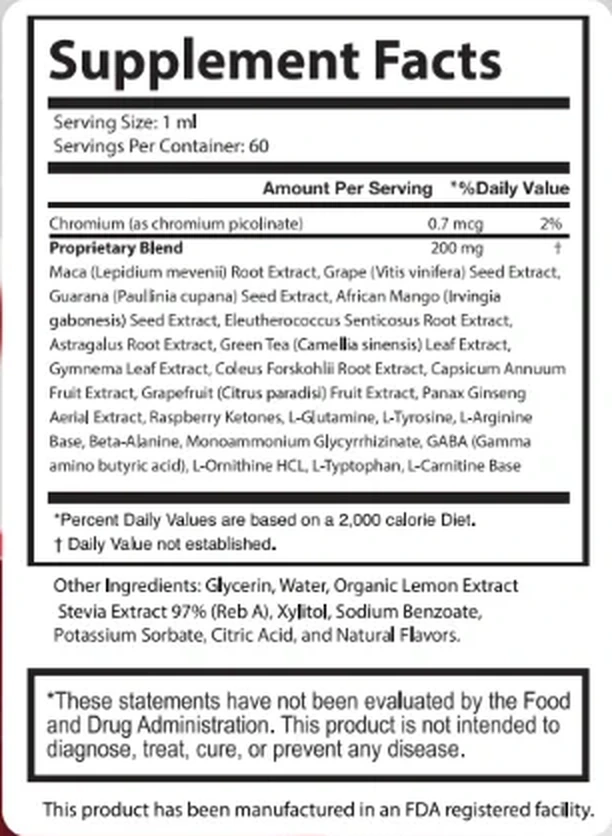
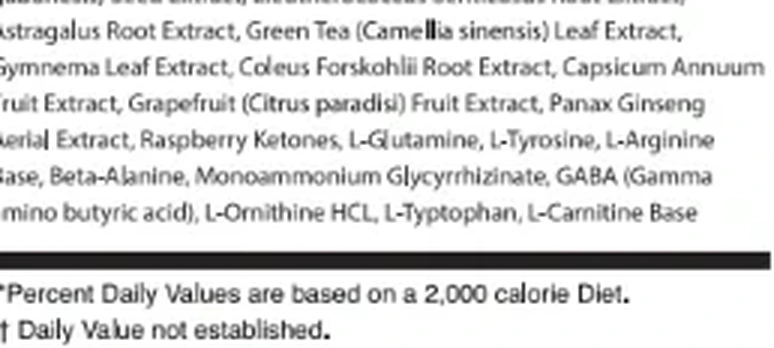
A total of 200 mg per 1 ml serving, followed by 22 names in a single line.
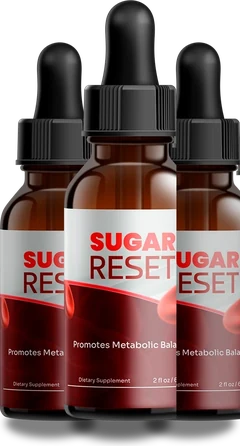
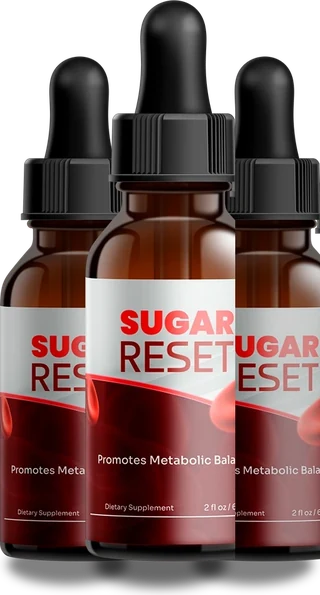
| Product | SUGAR RESET, front: Promotes Metabolic Balance* |
|---|---|
| Form and size | Liquid drops, 2 fl oz (60 ml), Dietary Supplement |
| Serving | 1 ml; 60 servings per container |
| Chromium | 0.7 mcg (as chromium picolinate), 2% Daily Value |
| Proprietary Blend | 200 mg; 22 names; no amount printed for any name |
| Other ingredients | Glycerin, Water, Organic Lemon Extract, Stevia Extract 97% (Reb A), Xylitol, Sodium Benzoate, Potassium Sorbate, Citric Acid, and Natural Flavors |
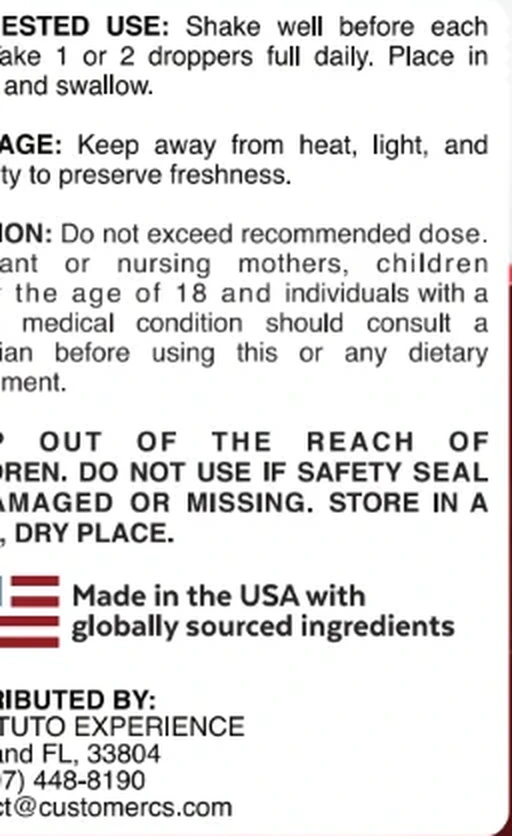
| Suggested use | Shake well before each use. Take 1 or 2 droppers full daily. Place in mouth and swallow. |
| Storage | Keep away from heat, light and humidity |
| Caution | Do not exceed recommended dose; pregnant or nursing mothers, children under 18 and people with a known medical condition should consult a physician |
| Made | Made in the USA with globally sourced ingredients; manufactured in an FDA registered facility |
| Distributor | Instituto Experience, Lakeland, FL 33804, +1 (507) 448-8190 |
| Item | As printed | What it tells you |
|---|---|---|
| Total | Proprietary blend 200 mg | The combined weight of all 22 names per serving |
| Names | 22, starting with Maca and ending with L-carnitine | Which ingredients are in the blend |
| Order | Listed in the order printed on the panel | Descending weight, if the label follows the rule |
| Each amount | Not printed | Nothing; it cannot be worked out |
The order is the one piece of extra information. If the label follows the rule, Maca is present in the greatest weight and L-carnitine in the least.
Arithmetic03
What do the numbers add up to?
Divide 200 mg by 22 names and you get about 9.1 mg each, but that is an average and nothing more.
The real split is almost certainly uneven. If the first names hold most of the weight, the last names could be present at 1 mg or less. If each name held exactly the average, a serving would have about 9 mg of each. Neither case can be checked from the label.
| Name | Amount printed on the label | Amount used in studies | Place in the blend | Evidence in brief |
|---|---|---|---|---|
| Chromium picolinate | 0.7 mcg per 1 ml (2% DV), the only separate amount | Weight trials used 200 to 1,000 mcg a day; adequate intake for adults is 20 to 35 mcg a day (NIH ODS, Chromium) | Printed outside the blend | Mixed; clinical meaning unclear (ODS) |
| Gymnema | Not printed | Different leaf extracts and doses; no common dose (Devangan et al. 2021) | 8th of 22: at most 25 mg of the 200 mg | Small, varied trials; low quality |
| African mango (Irvingia) | Not printed | 300 mg a day of one branded seed extract in the main trial (MSK, Irvingia gabonensis) | 4th of 22: at most 50 mg of the 200 mg | Weak; independent reviewers doubt it |
| Green tea extract | Not printed | 141 to 1,207 mg a day of catechins in weight trials (NCCIH, Green Tea) | 7th of 22: at most 28.6 mg of the 200 mg | Small or no effect on weight |
| Maca root extract | Not printed | Studied for desire and fertility, not for glucose (MSK, Maca) | 1st of 22: at least 9.1 mg of the 200 mg | None found for blood sugar |
| Panax ginseng aerial extract | Not printed | Mostly root products for 30 days or more (NCCIH, Asian Ginseng) | 12th of 22: at most 16.7 mg of the 200 mg | Modest, uncertain; aerial part differs |
The table shows the totals for one and for two droppers, assuming a dropper holds 1 ml. The label does not say that, so the figures are a guide only. Take your own dropper volume into account.
Studied doses04
How do those amounts compare with studied doses?
Studies of single ingredients often use grams, not milligrams, so a 9 mg average is a long way from many studied amounts.
Trials of chromium for glucose have commonly used hundreds of micrograms a day, while this label prints 0.7 mcg (NIH ODS, Chromium). Trials of green tea extract and Irvingia used doses in the hundreds of milligrams for weeks (Jurgens et al., Cochrane 2012)(Onakpoya et al. 2013). A 9 mg average is far below those figures.
We are not saying the product is useless, and we are not saying it is safe because the amounts are low. We are saying that the evidence for single ingredients does not transfer to this product, in either direction.
Safety angle05
Can a hidden amount be a safety problem?
Yes. You cannot tell whether a stimulant or a glucose-active herb is present in a small or a larger share.
Guarana and green tea add caffeine, and FDA says most healthy adults can have up to 400 mg a day (FDA, Spilling the Beans). The label prints no caffeine amount. Gymnema, ginseng and chromium have each been studied for glucose, so a person on diabetes medicine needs to know about the risk of low readings (NIDDK, Low Blood Glucose).
Show the label to a pharmacist. Say that the amounts of each blend name are not printed, and ask what that means for the medicines you take.
SugarReset: 60 ml dropper bottle, 60 servingsPacks of 2, 3 or 6 bottles · live total shown at checkout · 60-day guarantee per the sales page
See packsWhat to ask a maker06
What can you ask a maker that prints a blend?
Five questions turn a hidden amount into a clear answer, if the maker is willing.
What is the amount of each name?
In mg, per serving.
Which extract and which part?
Leaf, root, seed or aerial part, and any standardised percentage.
Is there caffeine, and how much?
Per serving and per day.
Has the product itself been studied?
Ask for the study, not for a link to a different product.
Who makes it, and is there a certificate?
Ask for the name and the batch record.
A maker that answers all five is easier to trust than one that answers none. The contact details on the contact page reach the retailer, who can pass questions on.
Compare07
How does a blend differ from a full-disclosure label?
A full-disclosure label lists each ingredient with its own milligrams, so you can compare it with a study in one step.
Both formats are legal. A full-disclosure label does not prove a product works, but it lets you see whether the dose is near anything that was tested. A blend asks for trust instead. Many readers decide that a product that hides the amounts has to earn that trust some other way, such as a published study or a certificate of analysis.
Chromium on this label is outside the blend and has its own number, 0.7 mcg. That is the one dose you can compare, and it is small next to the doses studied.
Your decision08
How should you decide with a blend in front of you?
Treat the missing amounts as a cost, weigh them against the price, and keep your medicines the same.
- Do not expect results that a study of a single ingredient reported.
- Do not assume the product is harmless because amounts look small.
- Check your medicines, allergies, pregnancy and caffeine limits first.
- Prefer the smallest pack until you see how you react.
- Keep the guarantee dates, in case you want a refund.
The pricing page lists what each pack costs, and the side effects page lists cautions by ingredient.
FAQ09
SugarReset questions people ask
What is a proprietary blend?
A group of ingredients listed under one total weight, without the amount of each.
How much of each ingredient is in SugarReset?
The label does not say. It prints 200 mg for 22 names and 0.7 mcg of chromium separately.
Does the order of the names mean anything?
If the label follows the rule, names are listed from the greatest weight to the least.
Is a blend illegal?
No. Blends are allowed if the total and the names are printed.
Who wrote this10
Written and reviewed by
Pages built from the label images, seller information and linked NIH, FDA, CDC, FTC and peer-reviewed sources.
Last updated . Read our editorial standards and how we check reviews. This website is the information site for a U.S. authorized retailer of SugarReset. It is not the manufacturer or the distributor named on the label. We earn money when you buy through our order links.
Keep reading
More about SugarReset
USA Authorized SugarReset Retailer
Ready to look at SugarReset?
Check your medicines first, especially any diabetes medicine, read the directions on the bottle that arrives, then pick a pack of 2, 3 or 6 bottles. The checkout shows the live total, shipping and the guarantee terms.
- Checkout runs on the seller's sales site
- 60-day guarantee, per the sales page
- Ships from the U.S.